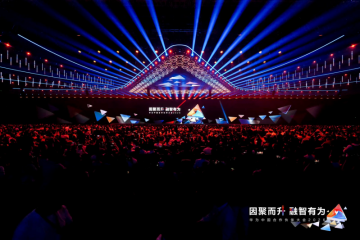
On March 6, 2026, the 10th Annual Conference on Traffic Signal Control Development grandly opened in Hangzhou.
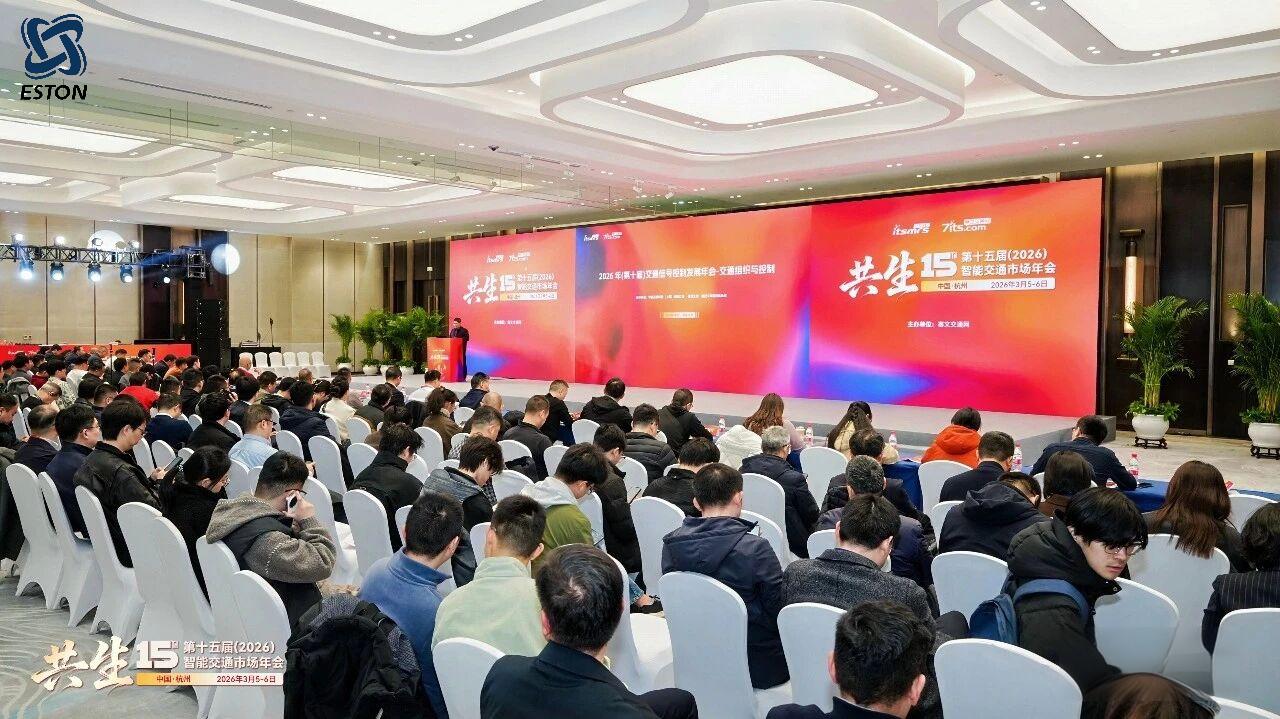
This conference coincides with the 10th anniversary of the founding of the Signal Control China Elite Club. Over a decade of deep cultivation, the Club has gathered nearly 3,000 registered members, 49% of whom are industry elites with over 10 years of experience. It has published more than 360 in-depth reports in the traffic signal field, conducted 24 on-site surveys covering 17 cities, carried out 10 consecutive years of industry market research, hosted 16 large-scale forums and 33 online seminars, and produced 3 industry development documentaries—witnessing and driving the growth of China’s traffic signal control industry with professional strength.
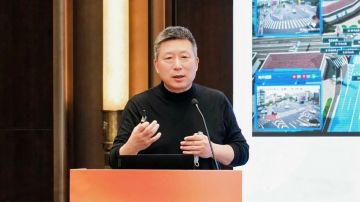
At the conference, Sun Zhengliang, former Director of the Traffic Management Research Institute of the Ministry of Public Security, delivered a keynote speech. He noted that amid technological and industrial transformation, the traffic signal control sector will face greater challenges and opportunities in the next decade. As signal control shoulders the mission of supporting travel transformation and empowering urban traffic development, the industry must stay grounded, uphold integrity, and pursue innovation.
After 10 years of development, the theme reports and industry exchanges at the 10th Annual Conference reveal that AI-enabled traffic signal control has become an industry trend, while traditional methods like actuated control still play a vital role. Looking ahead, the field will embrace the "digital signal" revolution in the era of vehicle-road-cloud integration and align with the development of China’s domestic IT industry.
Selected Insights from Conference Guests
- AI signal control technology is generally still in the theoretical exploration and simulation stage, with a long way to go before practical system development.
- The essence of traffic control is the artificial allocation of public resources. AI should serve as an execution tool, not a "decision-maker" that formulates value judgments.
- AI will inevitably dominate the execution layer of traffic control, but the core right to set goals and make value judgments will always remain in human hands.
- The implementation of large AI models requires building personalized knowledge bases while developing multi-level agents (micro, meso, and macro) to truly empower traffic management rather than disrupt it.
- Wuxi has pioneered a new model of full-domain, full-network digital signal management and a new travel service environment, realizing the standardization of "digital signals" for cloud deployment, in-vehicle application, and map visualization.
- Optimize management and processes to avoid complex technical investments, simplify complex problems, and achieve efficient governance.
- Actuated control is a sound economic investment—a "people-friendly business" that guarantees stable returns.
AI Signal Control in the Spotlight: Parallel Progress of Technology Implementation and Rational Reflection
AI empowerment of traffic signal control emerged as the core topic of the conference. Companies such as CSSC Jierui Technology and Youliang Technology showcased innovative AI applications in signal control, while industry experts conducted in-depth analyses of technical pain points and implementation paths, forming an industry consensus of "technological innovation + rational regression".
Case 1: CSSC Jierui Technology’s Closed-Loop Intelligent Control System
Wang Xinhe, Senior Solution Manager at CSSC Jierui Technology (Shanghai) Co., Ltd., analogized the logic of traffic signal control to a medical treatment process in his keynote report:
- Perception: Like initial diagnosis, collecting raw data (traffic flow, queue length, etc.) via cameras, radars, and loop detectors—equivalent to issuing medical check-up forms.
- Evaluation: Corresponding to preliminary diagnosis, analyzing data to qualitatively and quantitatively assess congestion levels and traffic efficiency.
- Diagnosis: Corresponding to confirmed etiology, identifying root causes of traffic problems (e.g., mismatched traffic flow and signal timing, conflicts at specific intersections) by synthesizing multiple data sources.
- Optimization: Corresponding to formulating a treatment plan, adjusting signal timing and traffic organization, tracking effects, and entering the next closed loop to ensure problem resolution.
Addressing three core challenges of traditional traffic signal control—unpredictable spatiotemporal demand, non-linear state evolution, and difficulty optimizing high-dimensional complex systems—CSSC Jierui achieved three breakthroughs: real-time spatiotemporal demand prediction, multi-scale twin simulation of operational states, and human-machine integrated intelligent control optimization. It developed a digital twin and AI hybrid-driven optimization platform and completed four technical upgrades: from cross-sectional aggregation to individual continuity, from offline reconstruction to twin simulation, from single intelligence to integrated intelligence, and from sparse scenarios to autonomous adaptation. With a twin model library, intelligent knowledge base, and integrated platform, the system ultimately builds an autonomous closed-loop technical system of "perception-evaluation-diagnosis-optimization" for traffic signal control.
Case 2: Youliang Technology’s AI-Assisted Signal Control
Wang Chao, Technical Director of Chongqing Youliang Technology Co., Ltd., focused on AI-based regional traffic flow prediction models and applications, demonstrating the practical auxiliary role of an AI signal control assistant via video.
Case 3: Professor Wang Dianhai’s Pragmatic View on AI Signal Control
Professor Wang Dianhai, former Director of the Institute of Intelligent Transportation at Zhejiang University and Director of the Zhejiang Provincial Engineering Research Center for Intelligent Transportation, stated bluntly in his report "Where is the Road for Urban Signal Control?" that AI signal control technology is still in the theoretical and simulation stage, far from practical system development.
He identified two core issues:
- Insufficient practicality: Reinforcement learning relies on excessive assumptions, demanding data, and long training times, making it unsuitable for real-world scenarios. Large language models (LLMs) generate plans based on semantic logic, raising reliability concerns due to a lack of trusted solution libraries.
- Data challenges: Adaptive control requires high-quality data, and like traditional technologies, AI still needs a perfected data environment—including non-motorized traffic data.
His recommendations:
- Integrate reinforcement learning models with real systems, training control plans offline and using LLMs for online selection.
- Use LLMs as auxiliary tools to assist human decision-making in non-quantitative scenarios and determine control 预案.
- Authorities and enterprises must persist in improving the data environment, including non-motorized traffic data.
He emphasized: "Signal control is a highly practical systems engineering. Technology is a variable means; solving problems is the constant goal."
Case 4: Researcher Zhang Fusheng’s "Human-Centric AI" Framework
Zhang Fusheng, a researcher at the Beijing Key Laboratory of Intelligent Traffic Control at North China University of Technology, analyzed core pain points of AI signal control from two dimensions: quality dilemmas and implementation barriers.
Quality Dilemmas:
- Random output: AI produces inconsistent results under identical inputs, lacking standardized control logic.
- High latency: Computation time cannot match the dynamic nature of traffic flow, leading to uncertain outcome delivery.
- Lack of causal logic: Black-box models lack clear physical/traffic explanations, struggling with complex boundary conditions.
Implementation Barriers:
- Dependence on manual verification: AI-generated plans require secondary expert review before deployment.
- Offline-only application: AI signal control is mostly used for post-hoc analysis or offline simulation, unable to run real-time closed-loop control or respond to sudden congestion.
- Ambiguous liability: The inexplicability of AI decisions makes it hard to assign responsibility in the event of accidents or severe congestion.
Path to Breakthrough:
- Avoid the "Digital Moses" trap—the illusion that AI can miraculously eliminate physical congestion through algorithms.
- Humans set goals, AI executes: The essence of traffic control is the artificial allocation of public resources. AI should be an execution tool, not a "decision-maker" for value judgments.
- Decision layer: Human subjectivity is restored. Urban traffic managers set core control goals (safety first, efficiency first, or fairness first) and retain final decision-making power.
- Strategy layer: Under human supervision, AI understands spatiotemporal features from multi-modal data and generates optimal strategies, acting as an efficient "execution assistant" rather than a "digital god".
- Execution layer: Signal devices respond to AI-generated instructions in real time, adjust timing in the physical world, and feedback operational effects to the decision and model layers, forming a closed loop.
Looking ahead, Zhang noted that physical models, world models, and complex models understanding social operation will eventually emerge, providing stronger theoretical and tool support for resolving traffic supply-demand contradictions. "AI will inevitably dominate the execution layer of traffic control, but the core right to set goals and make value judgments will always remain in human hands."
Case 5: Dr. Chen Ningning’s "All-Dimensional Signal Operation Management System"
Dr. Chen Ningning, CEO of Guangdong Zhenye Youkong Technology Co., Ltd., pointed out several industry anomalies: advanced hardware/software but lagging traffic engineering, data scarcity due to underfunded detection equipment maintenance, AI algorithms relying on manual timing adjustment, big data tools failing to address key pain points, and high public complaints despite impressive optimization metrics.
Facing the "new normal" of tightened budgets and complex demands, he proposed returning to the essence of management and building an all-dimensional signal operation management system: "front-back-left-right-up-down".
- Front-end: On-site support to solidify foundations.
- Back-end: Cloud-based think tanks for empowerment.
- Left-right: Timing and operation management tools.
- Up-down: Result refinement and knowledge 沉淀 to form a closed loop.
He stressed that the implementation of large AI models requires building personalized knowledge bases while developing multi-level agents (micro, meso, and macro) to truly empower traffic management rather than disrupt it.
Multi-Topic Parallel Seminars: Exploring Diverse Development Paths
In two special forums—Traffic Organization and Control and Traffic Perception and Control Strategies—highlighted topics included vehicle-road-cloud integration, domestic IT solutions, signal control transformation in the intelligent driving era, and comprehensive traffic governance models.
- Shu Aibing (Traffic Management Research Institute of the Ministry of Public Security): Shared "Vehicle-Road-Cloud Integration Driving Quality and Efficiency Improvement in Traffic Signal Control". He noted that large-scale application of vehicle-road-cloud integration faces three major pain points: "incomplete visibility, inaccurate measurement, and imprecise control". The institute has built an "end-network-cloud collaborative signal control architecture" with a standard system as its foundation. It integrates multi-source heterogeneous data (roadside, traffic management, industry platforms) in the data layer; realizes intelligent decision-making for intersection groups and control information services in the control layer via roadside "perception-computation-control-communication" closed loops and global coordination of cloud signal control platforms and city-level V2X application platforms; and finally delivers applications such as digital signal push, green wave guidance, and dynamic variable lanes in the application layer.
- Wu Yuanxi (Beijing Kytone Tech): Shared a "Full-Stack Domestic IT Solution for Global Signal Control Needs", supporting the industry’s independent and controllable development.
- Xie Jianjia (Starroad Intelligent Connection): Argued that "AI + traffic signal control" is both a future trend and an inevitable path for the industry. "Technology empowers, people-oriented." He emphasized that the full release of AI’s true value requires deep cultivation in technology R&D, scenario adaptation, and ecosystem construction, with human participation being indispensable.
- Zhao Yue (Shandong Jiaoda Zhixing): Analyzed industry trends: urban traffic shifting from scale expansion to quality improvement, small and medium-sized cities facing shortages of professional talents and financial constraints, and traditional "transfusion-style" services failing to fundamentally enhance local governance capacity. He proposed a new "accompanying empowerment" comprehensive traffic governance model centered on "from transfusion to hematopoiesis".
- Practical cases: Representatives from public security traffic management departments (Cai Xiaoke from Xiangtan, Wang Chao from Yongkang, He Tianmeng from Hangzhou) shared real-world cases, providing vivid references for technology transformation and application.
A roundtable discussion titled "How Can Large AI Models Be Used in Signal Control?" was also held, moderated by Dr. Chen Ningning, with industry, academic, and research guests (Zhang Fusheng, Wu Yihao, Wang Chao, Xie Jianjia, Sui Zongbin) engaging in dialogue.