
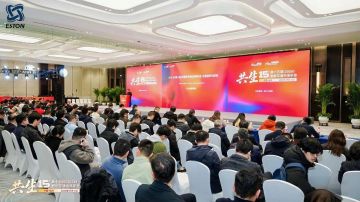
On March 5, 2026, at the Forum on Innovation and Application of Vehicle-Road-Cloud Integration and New Transportation Infrastructure during the 15th Intelligent Transportation Market Annual Conference, Yang Lei, Chairman of Jiangsu Tianan Zhilian Technology Co., Ltd., delivered a keynote speech entitled Application-Driven Two-Way Empowerment – Integrated Development Path of Vehicle-Road-Cloud Integration and Intelligent Transportation.
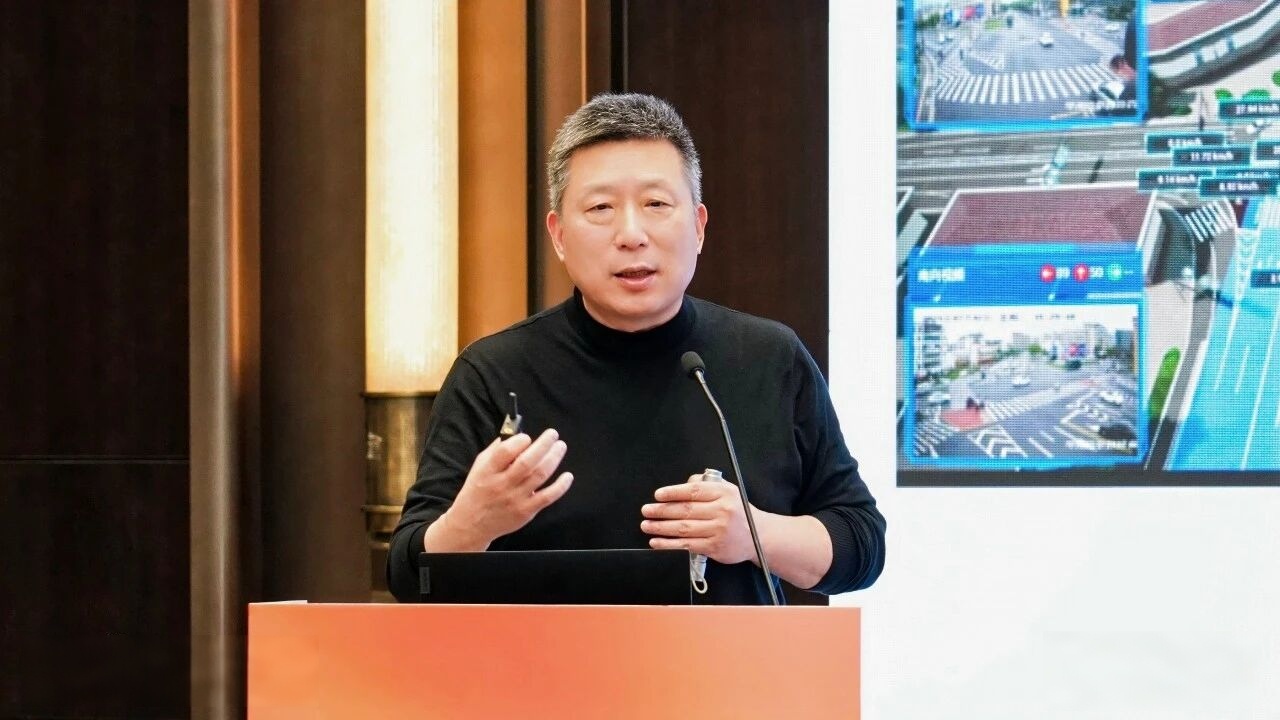
Yang Lei reviewed the development context of vehicle-road-cloud integration, systematically dissecting its two-way logic of "empowering intelligent transportation and empowering intelligent vehicles". He analyzed its supporting value for dynamic traffic control and revealed its symbiotic relationship with connected and autonomous vehicles. Combining Wuxi’s on-the-ground practices and typical cases, he outlined an integrated path for vehicle-road-cloud integration to drive the all-domain upgrading of transportation from the dimensions of data empowerment, rule adaptation and public attributes, providing key insights for the large-scale, high-quality development of the industry.
Those of us who have worked in the transportation sector for decades know that vehicle-road-cloud integration is an emerging concept, formally proposed in 2011. Prior to that, related concepts evolved from the Internet of Things in 2009, the Internet of Vehicles in 2012, to Vehicle-Road Cooperation during 2013–2014. This continuous evolution of concepts has led to a lack of unified understanding within the industry.
A prominent transportation professional has repeatedly emphasized that issues should not be considered solely from the perspective of single-vehicle intelligence, but should be based on urban infrastructure development. However, from the viewpoint of automakers, this view inevitably causes confusion: if transportation practitioners disregard the application needs of automakers, the latter will be reluctant to take the initiative to participate.
Previously, industry experts also mentioned two-way empowerment, but focused on how vehicle-road-cloud integration empowers intelligent transportation. What I intend to share is that vehicle-road-cloud integration will next empower vehicles, and in the future vehicles will reversely empower intelligent transportation.
The core of vehicle-road-cloud integration is to add powerful sensing capabilities to the transportation sector through coordination among roadside, cloud and vehicle terminals. This enhanced sensing capability enables traffic management to "see clearly, see fully and act effectively", with practical response measures.
For instance, in the past, traffic police departments could not scientifically adjust traffic signal timings without knowing vehicle queue lengths at intersections in all directions; they could not reasonably carry out road channelization without understanding the distribution of left-turn, straight and right-turn vehicle demands. Even if traffic police identified problems on-site, they could not implement adjustments due to the lack of a variable road system.
A prominent problem in current traffic management is that lane arrows on roads are fixed; once the number and distribution of left-turn, straight and right-turn lanes are determined, they are difficult to adjust, while actual traffic flows often mismatch fixed lane configurations. Even if traffic authorities perceive traffic flow changes and identify problems, they cannot promptly adjust lane functions, making it hard to achieve dynamic matching between traffic demand and supply. Traffic demand refers to the travel needs of all road users, while traffic supply includes roads, parking lots and other infrastructure, which have long remained static.
Vehicle-road-cloud integration provides comprehensive enhanced sensing for traffic management. The traffic management cloud brain formulates response strategies based on sensed information, which is then fed back to the entire transportation system through digital traffic command signals and dynamic control measures such as variable channelization, variable traffic lights and variable green waves. When such vehicle-road coordination data is sent back to the cloud platform, it influences all road users — for example, adjusting intersection signal timings, modifying lane channelization (e.g., increasing left-turn lanes from one to three), and redirecting vehicle flows to achieve deep integration between traffic demand and supply.
As reflected in the sharing by experts at this conference, traffic police departments have a profound understanding and positive acceptance of vehicle-road-cloud integration, and are also important users of the system.
The sensing and communication capabilities of vehicle-road-cloud integration strongly support traffic management. Dozens of variable lane optimizations, V2P pedestrian warnings and other applications have been implemented in Wuxi, enabling traffic management to truly "see, understand and act".
In addition to empowering the upgrading of intelligent transportation, vehicle-road-cloud integration also supports the deployment of connected and autonomous vehicle applications. Reviewing industry development, the early Internet of Vehicles was weakly linked to the transportation sector; only at the vehicle-road cooperation stage did the transportation industry participate deeply. Vehicle-road-cloud integration adds cloud capabilities on this basis, forming multi-dimensional coordination among vehicles, cloud and roads. Its value lies not only in connected and autonomous vehicle applications, but also in driving data-led industrial development.
After extensive infrastructure construction, the generated data serves not only vehicle passage but a wider range of application scenarios.
Take the loss of a road manhole cover as an example. Relevant information needs to be notified not only to drivers but also to pedestrians. Under complex conditions such as rain-covered road surfaces, the gas, power and water supply pipelines beneath the cover require timely detection and precise early warning. Traffic police need to set up temporary barriers, and road, gas and power authorities must carry out repairs.
This entire coordinated response relies on information support from vehicle-road-cloud integration. Abnormal manhole cover status can be detected via on-board equipment, pedestrian feedback, roadside cameras and other means. Such information constitutes the core sensing content of the vehicle-road-cloud integration system, determining that its service targets cover three areas: traffic management, vehicle operation and urban facility maintenance.
Based on practical experience in transportation empowerment, projects adhere to demand-driven and value-oriented principles, conducting value assessments from three dimensions: technological maturity, user experience and industrial driving effect.
In Wuxi, for example, national standard digital signals have been verified through more than two years of practice, with relevant national standards officially released at the end of 2023. Featuring high technological maturity, they boost local intelligent transportation enterprises and significantly improve public travel experience, making them a priority for promotion. Through multi-dimensional horizontal comparisons, actual demands and core values are clarified, and a corresponding effect evaluation system is established to detect and handle issues before online public opinions and alarms, ensuring effective project implementation.
Returning to the core theme of two-way empowerment, vehicle-road-cloud integration also plays a vital role in empowering connected and autonomous vehicles. However, in early communications with automakers, the industry generally expressed concerns: roadside data lacked sufficient accuracy and could not be 100% reliable; if accidents occurred after vehicles adopted such data, liability would be hard to define, resulting in low willingness to participate. With pilot projects in Beijing, Chongqing and other cities, 15 domestic automakers have gradually joined in, deepening their understanding of vehicle-road-cloud integration.
Data provided by vehicle-road-cloud integration to automakers mainly falls into three categories, with promotion paths covering short, medium and long terms, serving vehicles from L0 to L5 autonomous driving and fully autonomous vehicles. According to the national roadmap, large-scale application of fully autonomous vehicles in closed parks and other scenarios will still take a long time; current deployment focuses on short- and medium-term applications.
Vehicle-road-cloud integration can provide safety reminders for drivers and information support for assisted driving. Information accuracy is a common concern. Among various types of information, traffic management information — including signal light data, control instructions and traffic incident alerts — boasts near-100% reliability.
In a traffic accident in Anhui last year, a vehicle merged from the right to the left lane. Speed reduction and lane change warnings had been set 1.5 kilometers ahead, but the vehicle failed to recognize them, continuing at 120 km/h and braking urgently only tens of meters from the intersection, eventually crashing into guardrails.
In daily driving, traffic incidents such as front collisions and lane changes are usually indicated by roadside signs, allowing drivers to slow down in advance. Single-vehicle intelligence relies on on-board sensing, which is prone to failure when traffic lights or speed-limit signs are blocked by large vehicles.
Most common highway accidents occur when a bus blocks the view, preventing drivers from seeing lane change or exit signs in advance. They brake and change lanes abruptly after passing the vehicle, causing scratches, rear-end collisions and other hazards.
This shows that traffic management information is critical for drivers and irreplaceable for future intelligent driving.
Current users of vehicle-road integration mainly include connected and autonomous vehicles, drivers and traffic management authorities. For vehicles to integrate into the transportation system, they must abide by traffic control rules. The use of traffic lights at intersections to resolve right-of-way conflicts forms the foundation of orderly traffic.
In traditional driving, drivers learn traffic rules through training and exams and hold valid licenses. Only when qualified vehicles are operated by qualified drivers can they safely integrate into the transportation system. Traditional automakers only manufacture vehicles without assuming the "driver" role, focusing mostly on vehicle performance rather than adapting to drivers’ cognitive needs or traffic regulations. Many current end-to-end autonomous driving solutions still over-rely on on-board sensing, lacking systematic understanding of traffic rules and road environments.
The traffic regulations issued in 2004 include numerous traffic signs, which even licensed drivers may not fully master. In the "3·29" accident last year, a left-pass sign was set in the middle of the road, but the driver failed to recognize it correctly, leading to a tragedy. If human drivers struggle with accurate recognition, autonomous vehicles relying solely on self-sensing face even greater challenges.
On actual roads, various traffic signals and signs are complex and diverse, including dedicated bicycle turn signals, multi-form lane indications, coordinated U-turns and no-entry guidance. Many drivers misjudge such scenarios. For instance, at some intersections in Wuxi, drivers unnecessarily stop and wait even when multiple left-turn spaces are available, wasting road resources. Complex intersections in Jinan, Pudong, along the Suzhou River and other places place extremely high demands on the decision-making ability of autonomous vehicles.
Obtaining control information 300 meters before entering an intersection via national standard digital signals would greatly improve safety and efficiency. Several controlled intersections in Wuxi feature left-turn lanes on both the far left and far right to accommodate large vehicles. Drivers must confirm lane choices 300 meters in advance, much like aircraft receiving runway scheduling instructions when approaching. Proper right-of-way allocation and advance information are key to orderly passage.
These complex traffic signs and rules prove that reliable autonomous driving cannot be achieved through single-vehicle intelligence alone. The transportation system is a complete system requiring full-domain coordination. Autonomous vehicles often struggle to accurately identify detailed information such as tunnel light reminders, ground lane arrows and directional passage permissions.
In terms of passage priority, police command ranks highest, followed by traffic lights, traffic signs and road markings. This core principle is not fully grasped by current autonomous driving systems. If a vehicle assumes a left turn is permitted based on road markings but is actually prohibited by regulations and on-site control, liability will become a prominent issue in the event of an accident.
Traffic laws and regulations are the fundamental basis for safe passage. A core practice in Wuxi is to convert traffic regulations into digitally identifiable information. Before the popularization of communication and digital capabilities, blocked or poorly visible road signs and signals easily caused safety hazards.
In real scenarios, autonomous vehicles crossing solid lines illegally and collisions involving high-end intelligent vehicles still occur frequently. Construction warnings and complex road conditions challenge human drivers’ quick recognition, posing an even greater test for vision-reliant autonomous vehicles.
Typical accidents such as the Meida Expressway disaster demonstrate clear limitations of single-vehicle sensing. By the time vehicles detect danger, it is often too late to avoid it. Within two hours, multiple cars fell off a cliff; only high-chassis, slow-moving trucks detected the danger in time and stopped subsequent vehicles. This fully proves that single-vehicle intelligence cannot handle such extreme scenarios.
In dynamic control scenarios such as waiting areas and variable tidal lanes, lane allocation may adjust in real time with signal phases, easily causing decision confusion in single-vehicle intelligence. Future trends including dynamic green wave adjustment, time-sharing control of bus lanes and real-time variable signs will further increase traffic complexity, making visual recognition alone insufficient for safe passage.
In addition, scenarios such as on-site police hand signals and dynamic interaction with non-motor vehicles impose higher requirements on the coordination capability of autonomous driving.
Based on the above practices and reflections, Wuxi holds that data from vehicle-road-cloud integration should first serve traffic management, which is the foundation and priority of industrial development. Meanwhile, such data should simultaneously empower vehicle terminals, covering original-equipment manufacturers, retrofitted existing vehicles and commercial vehicles.
Currently, Wuxi cooperates with automakers including Geely in the original equipment sector, and builds an ecosystem through rearview mirror terminals and other devices in the aftermarket, covering private and special operation vehicles. To address rear-end collisions caused by sprinkler operations on urban expressways interfering with vehicle radar and video systems, Wuxi has installed OBU devices on fire engines, ambulances and municipal operation vehicles. Through the vehicle-road-cloud integration platform and map data, it achieves full-domain sensing and risk early warning for pedestrians, non-motor vehicles, ordinary vehicles and autonomous vehicles.
Human drivers judge road conditions using physical signals, while future intelligent vehicles should operate based on digital signals. The current traffic management model features police managing drivers; in the future, it will gradually evolve into machine-to-machine intelligent control. This requires direct, reliable and unified signal sources to enable vehicles to truly "see and understand", thus achieving safer and more efficient passage.
The development of vehicle-road-cloud integration fully indicates that vehicles will undergo profound changes in the future. Without vehicle-road-cloud integration and digital traffic management information, sustainable deployment of autonomous driving will be difficult. Transportation practitioners should uphold systematic thinking, not be limited by the single route of single-vehicle intelligence, and view urban infrastructure as the foundation. They must fully recognize that vehicle-road-cloud integration is a complex multi-stakeholder system, with transportation authorities, automakers and infrastructure providers all indispensable.
The information interaction model of next-generation vehicles essentially evolves from physical interaction to digital connectivity. Since the invention of the automobile in 1886, vehicle interaction has progressed through shouting, hand signals, turn signals, headlights, brake lights and horns — all designed to achieve connectivity and coordination between vehicles and their surroundings. Initially, vehicle interaction with traffic lights also relied on human vision to capture physical signals.
Connectivity is crucial, and the core of vehicle-road-cloud integration is to solve full-domain connectivity. Future transportation requires V2V vehicle-to-vehicle cooperative driving, a key direction being promoted by the industry. Once vehicles are fully connected, challenges in traffic management and multi-stakeholder empowerment will be resolved. This pattern resembles the development of new energy vehicles: when the scale of electric vehicles reaches a tipping point, highway charging and swapping stations are widely deployed, with infrastructure and application scenarios mutually reinforcing each other.
Current innovations on highways remain mostly superficial, with real transformation yet to come. Cities, however, enjoy advantages in pilot implementation. Promoting vehicle-road-cloud integration in cities can achieve comprehensive improvements in social benefits, industrial value and digital governance.
From a public attribute perspective, road sensing facilities, like urban security cameras, are public social infrastructure with an unshakable public service nature. The digital traffic signal system, an upgrade of traditional physical traffic lights, is also a public good and should not prioritize commercial charging.
In dynamic control scenarios such as variable lanes, temporary road closures and road collapses, single-vehicle sensing cannot detect temporary regulatory and right-of-way changes. Only authoritative information issued from the cloud can ensure safe and orderly passage. On public roads, all vehicles must abide by traffic laws, whose digital carrier is unified authoritative information released via the cloud — the sole standard for vehicles to integrate into the transportation system.
Vehicle-road-cloud integration generates massive data during operation, forming a virtuous cycle of multi-stakeholder coordination and two-way empowerment. Wuxi collects high-precision map data in real time through thousands of vehicles, continuously updating road information and sharing it with autonomous vehicles, effectively solving sensing challenges caused by frequent road reconstruction, dynamic channelization and signal timing changes.
Meanwhile, the city regularly conducts V2X information quality evaluations to continuously monitor signal coverage and communication quality, preventing facility performance degradation after project acceptance.
Intelligent roads can monitor risks such as freezing rain and slippery surfaces in real time. Wuxi once issued early freezing rain warnings through fused roadside and on-board sensing, providing critical support for traffic authorities and traveling vehicles. Data collected by vehicles, verified by roads and empowered by the cloud flows back to traffic management, operation and maintenance teams, and automakers, forming a multi-win closed-loop system.
The essence of vehicle-road-cloud integration is to synchronously empower traffic management, intelligent vehicles and urban digital governance with high-quality information through enhanced sensing, artificial intelligence and communication interaction, achieving upgrades in full-domain operational capabilities.
At this stage, the value of urban promotion of vehicle-road-cloud integration is more reflected in social aspects; economic value will gradually emerge after the large-scale popularization of autonomous driving. This process is highly similar to the development of new energy vehicles. Early policies and industrial collaboration such as the "Ten Cities, Thousand Vehicles" program, charging pile pilots and dual subsidies for vehicles and charging infrastructure laid the foundation for today’s industrial landscape.
Therefore, the transportation industry, automotive industry and top decision-making authorities should reach a consensus and firmly advance the construction of vehicle-road-cloud integration, which boasts broad development prospects.





合作咨询
QQ 5257885在线咨询
合作咨询热线:
13779938068