Today, artificial intelligence, as a core driving force, is profoundly reshaping the development landscape of the transportation industry.
In early March, Liu Wei, Minister of Transport, stated at the second "Ministerial Passage" of the Fourth Session of the 14th National People's Congress that during the 15th Five-Year Plan period, China will focus on further implementing the "Artificial Intelligence+" initiative, vigorously develop smart transportation, promote large-scale application of typical scenarios such as "Artificial Intelligence + Highway Inspection", and accelerate the development of smart highways, smart ports and intelligent shipping.
It is evident that AI has become a core strategy of the 15th Five-Year Plan. Policy support and resource investment at the national level have fostered an unprecedentedly sound environment for the development of Artificial Intelligence + Transportation.
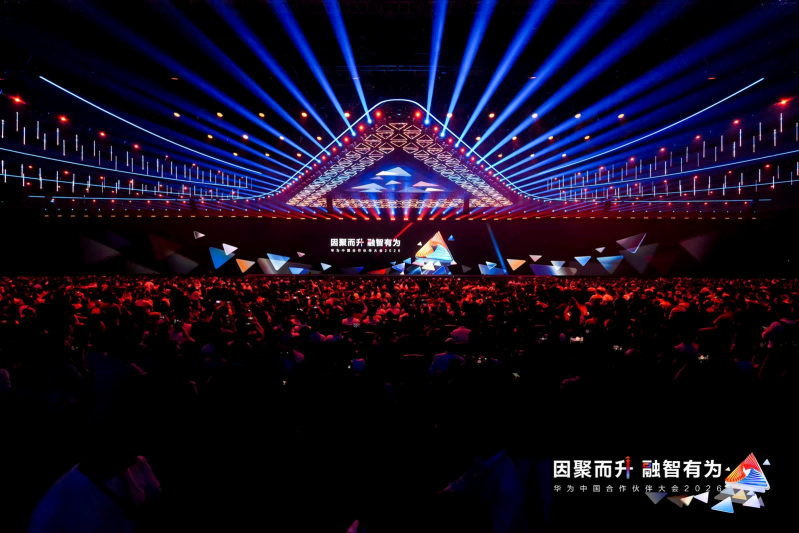
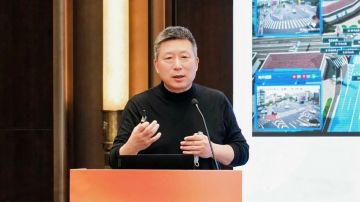
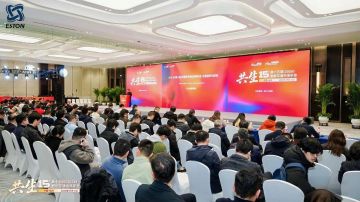
On March 19, Huawei China Partners Conference 2026 opened at Shenzhen World Exhibition & Convention Center. At the special forum "Huawei Joins Hands with Partners to Empower 'Artificial Intelligence + Transportation'", Xu Zhiyu, Vice President of Huawei Smart Transportation Business Unit, made a forward-looking judgment: the transportation industry is transforming from informatization and digitalization to intelligence, and the development of AI + transportation applications is also advancing from infrastructure digitalization auxiliary scenarios to core transportation and logistics scenarios.
In the past two years, the iteration of AI technologies has been extraordinarily rapid, further accelerating the application of AI in the transportation industry.
In 2025, DeepSeek, with its strategy of "low cost + high performance + open source", broke the monopoly of Silicon Valley technologies, greatly lowered the threshold for AI applications and promoted technological inclusiveness. Affected by technological spillover, solutions and products centered on AI technologies emerged endlessly in the transportation market that year. How to promote the large-scale application of relevant products and solutions has become a key challenge for enterprises in the industry.
In early 2026, OpenClaw achieved a leap in AI capabilities from dialogue to execution with its core strengths of "local deployment + automated execution". This change has opened up new opportunities for the integrated development of technological breakthroughs and industrial applications. Manufacturers are following up the adaptation of relevant technical capabilities, and competition is moving to the next stage of integrated application.
The government is also continuously promoting the large-scale implementation of technologies. In September 2025, the Ministry of Transport and six other ministries jointly issued the Implementation Opinions on "Artificial Intelligence + Transportation", accelerating the intelligent construction of highways, railways, civil aviation, shipping and other fields, and building high-quality transportation datasets.
Henan, Hebei, Chongqing, Guangdong, Jiangsu, Anhui and other regions have also issued special implementation plans, focusing on local characteristics and key scenarios to promote innovative applications and practices of artificial intelligence in transportation.
"These policies are not just chasing the artificial intelligence boom, but an inevitable trend in the development of the transportation industry," Xu Zhiyu said at the forum.
From the perspective of industry status, the 2024 Statistical Bulletin on the Development of the Transportation Industry shows that by the end of 2024, China's national railway mileage reached 162,000 kilometers, highway mileage 5.4904 million kilometers (including 190,700 kilometers of expressways), port production berths 22,219, and certified civil aviation transport airports 263 (excluding Hong Kong, Macao and Taiwan regions). How to maintain such a huge network of assets, ensure safe and efficient operation, especially the systematic construction of large-scale transportation and logistics for domestic circulation, has become a major issue facing the industry.
Data aggregation and the development of artificial intelligence are the core directions to solve these problems and promote industrial development.
At present, in building basic AI capabilities, Huawei focuses on scenario planning for three stages: Chatbot, Reasoner and Agent.
Xu Zhiyu stated that the trend of AI applications is characterized by rapid iteration, and basic model capabilities are continuously upgrading. 2025 has entered the explosive period of L3 (Agent) applications, and this year may develop to the L4 (autonomous execution) level.
In the practice of transportation, Huawei takes AI technology as the core driving engine, centers on the "One Beam, Four Pillars" strategy of Huawei's transportation business — namely, large-scale logistics and transportation (One Beam), highways, ports, rail transit and aviation (Four Pillars) — and joins hands with partners to build intelligent benchmarks and explore incremental value in various fields.
In his forum speech, Xu Zhiyu introduced the technology implementation achievements of Huawei and its partners in various transportation fields, including six scenarios: intelligent railway marshalling, intelligent hub stations, port full-element scheduling agent, airline passenger flow forecasting, expressway investment & operation large model, and intelligent logistics document recognition. For example, Huawei and its partners focused on improving the maintenance and road safety capabilities of nearly 8,000 kilometers of expressways in Yunnan Province, and built an investment & operation large model. Based on Huawei Cloud Stack large model hybrid cloud architecture, a group-specific cloud-edge-device digital infrastructure was constructed, realizing integrated cloud management of general computing and intelligent computing, fully covering the whole lifecycle of expressway construction, management, maintenance, operation, service, safety and administration, and achieving full-process intelligent control.
During the forum, partners in various transportation fields also shared in-depth practical achievements of working with Huawei to deepen smart transportation and promote digital-intelligent transformation.
In the highway sector, partners and Huawei jointly built the Taihang Transportation Digital-Intelligent Large Model, fully covering the scenario needs of "construction, management, maintenance, operation and service", providing replicable benchmark experience for the industry's digital-intelligent transformation.
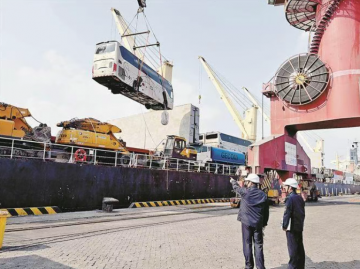
In the port sector, partners and Huawei jointly built a unified computing cloud, a unified network and a unified port map, forming an artificial intelligence infrastructure foundation for ports, realizing resource coordination across the entire port area. In the future, they will also join hands with leading AI enterprises and domestic port industry partners to build an artificial intelligence public service platform featuring scenario innovation, resource aggregation and win-win ecosystem, forming universal supporting capabilities for a unified architecture system in the port industry.
In the aviation sector, partners and Huawei have carried out in-depth cooperation around the digital-intelligent transformation of civil aviation, sorting out 227 high-value artificial intelligence business application scenarios. Relying on Huawei's private cloud platform and computing power, large and small models jointly drive the intelligent upgrading of businesses. In the construction of digital aprons, they have explored intelligent vehicle scheduling algorithms with Huawei, aiming to build a cross-domain, full-element collaborative flight support system.
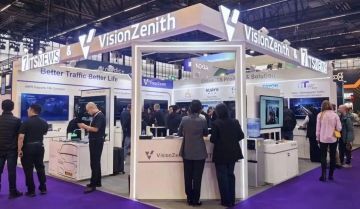
During the conference, Huawei and partners from various fields gathered in the exhibition hall and launched joint solutions including the rail transit intelligent station passenger flow forecasting platform, metro station vision large model intelligent operation solution, and airport intelligent data center and IOC application integrated solution.
AI empowerment brings "large increments" and "large markets" to the industry, making talent training and ecosystem construction the key to seizing new market opportunities and upgrading new AI value. The "Partner + Huawei" system also urgently needs to reach a higher level.
Therefore, facing the trend of the AI era, Huawei relies on its comprehensive training system to help partners transform in AI, providing them with complete AI tools and empowerment support, and promoting the construction of a compound AI talent team.
In planning the AI talent system, Huawei can help partners sort out talent standards, plan learning maps, formulate training plans and introduce certification programs; in talent capability building, Huawei provides training tools such as AI industry insight sharing, joint innovation project practice and methodology empowerment; in training technical backbones, it provides basic knowledge learning, practical training and collaborative project scenarios.
In ecosystem construction, Huawei fully opens up the Ascend AI ecosystem, opens Ascend toolchains such as CANN and MindSpore, open-sources the Pangu model, and empowers open-source models such as Qianwen and Doubao as well as industry-specific models with Ascend computing power, providing partners with development tools and empowerment courses to promote common development.
At the end of his speech at the forum, Xu Zhiyu expressed his hope that partners would work with Huawei to forge ahead on the road of artificial intelligence around industry scenarios and go further.
As AI continues to empower core scenarios in the transportation industry and scale up technology applications, 2026 will be a year of deep integration of "Industry + AI", accelerating the digital-intelligent upgrading of the industry.
In the future, Huawei will continue to deepen technological research and ecosystem collaboration, promote the in-depth integration of artificial intelligence and transportation, help build a safer, more efficient, smarter and greener modern comprehensive transportation system, and contribute solid strength to the high-quality development of transportation.





合作咨询
QQ 5257885在线咨询
合作咨询热线:
13779938068