

With the rapid development of motorization in China, the number of motor vehicles and drivers continues to rise, placing unprecedented pressure on the road traffic system. As one of the most critical variables affecting road efficiency and traffic safety, the scientificity and rationality of speed management have increasingly become the focus of public attention, traffic administrators and industry experts. On the one hand, speeding is one of the leading causes of fatal traffic accidents; on the other hand, criticisms such as “abrupt speed reduction” and “entrapment enforcement” have frequently appeared in the media, triggering extensive public discussion.
In many regions, speed limits are still set using a “one‑size‑fits‑all” approach based on road classification or historical experience. Such an “empirical fixed‑value” model can no longer adapt to the complex and changing traffic demands. How to restore scientificity to speed limit setting and make speed enforcement balance legitimacy and reasonableness has become an urgent problem to be solved in the modernization of traffic governance. From the perspective of frontline practitioners in traffic design, this paper discusses scientific demonstration methods for the deployment of speed enforcement equipment before installation, and shares reflections on the transformation from “empirical fixed values” to “data‑driven decision‑making” combined with practical cases.
In recent years, the Ministry of Public Security and local traffic management authorities have explicitly required written demonstrations on the feasibility, rationality and necessity of installing off‑site enforcement and surveillance equipment. Despite the continuous upgrading of top‑level design concepts, many challenges remain in the practice of speed limit management and speed enforcement, leading to a gap between ideal management goals and actual operational effects.
Many roads directly adopt their “design speed” as the speed limit. Although theoretically compliant, this often contradicts real‑world traffic operations. After a road is completed, its actual “operating speed” is jointly determined by road conditions, traffic composition, driver behavior and other factors. When the 85th percentile speed (V85, the speed not exceeded by 85% of vehicles, an internationally recognized scientific basis for speed limits) on a road with a design speed of 60 km/h reaches 80 km/h, rigidly enforcing 60 km/h will not only cause large‑scale “passive violations” but also undermine the seriousness of laws and public recognition. “Paper compliance” divorced from actual operating characteristics is one of the core causes of speed limit disputes.
Without systematic data support, speed limit adjustments or speed camera locations in some regions rely excessively on administrators’ personal experience or passive responses to specific accidents. For example, after a crash occurs on a road section, authorities simply lower the speed limit, or install speed enforcement equipment at a subjectively defined “hazard point”. Such a fragmented approach lacks systematic assessment of overall road risk; the decision‑making process is opaque, conclusions are often unconvincing, and road safety cannot be fundamentally improved.
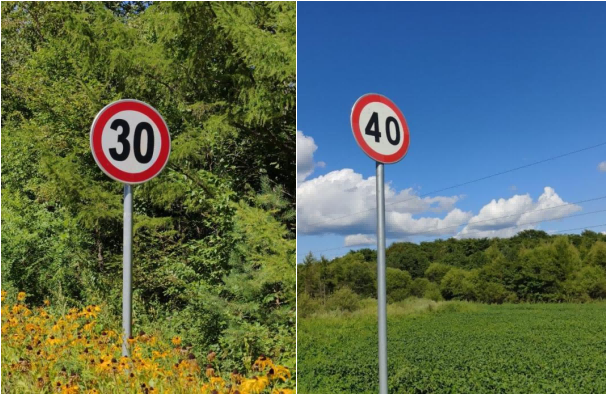
Road traffic is a continuous system, yet speed limit signs and speed enforcement devices are often deployed fragmentedly. Drivers may frequently encounter drastic speed limit changes on the same road — so‑called “speed traps” or “speed limit cliffs”. In addition, obscured signs, unclear information and non‑standard pre‑warnings of speed enforcement disrupt drivers’ normal cognition and judgment, which may create new safety hazards instead of effectively guiding safe driving. Proper speed limit management requires not only “correct limits” but also “clear notification”.
To overcome these dilemmas, a whole‑chain, data‑driven scientific demonstration system covering investigation‑analysis‑demonstration‑implementation must be introduced. The core of this system is to shift the basis of decision‑making from subjective experience to objective data, ensuring that every speed camera installation and every speed limit is well‑founded and reasonable. In recent years, professional traffic design and consulting teams have explored and refined this methodology in practice.
The first step of scientific demonstration is a full‑coverage “comprehensive physical examination” of the target road section. This is far more than a simple site survey; it is a multi‑dimensional investigation and risk diagnosis process.
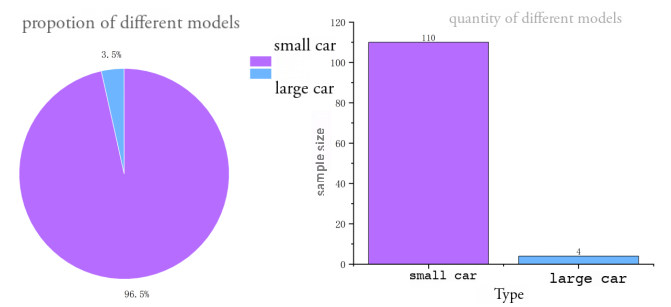
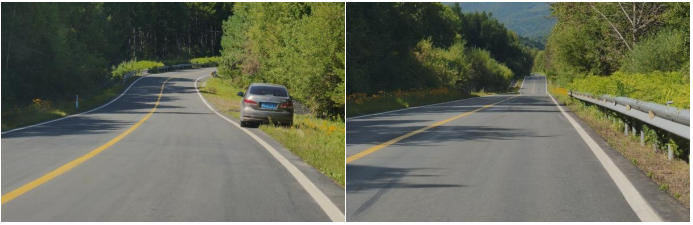
After the “physical examination”, the phase of data analysis and core judgment begins. The goal is to quantitatively evaluate road operating conditions and safety risks to provide core evidence for speed limit determination.
We believe that the most reasonable speed limit is embedded in the road’s own operating laws, which can be extracted through scientific models.
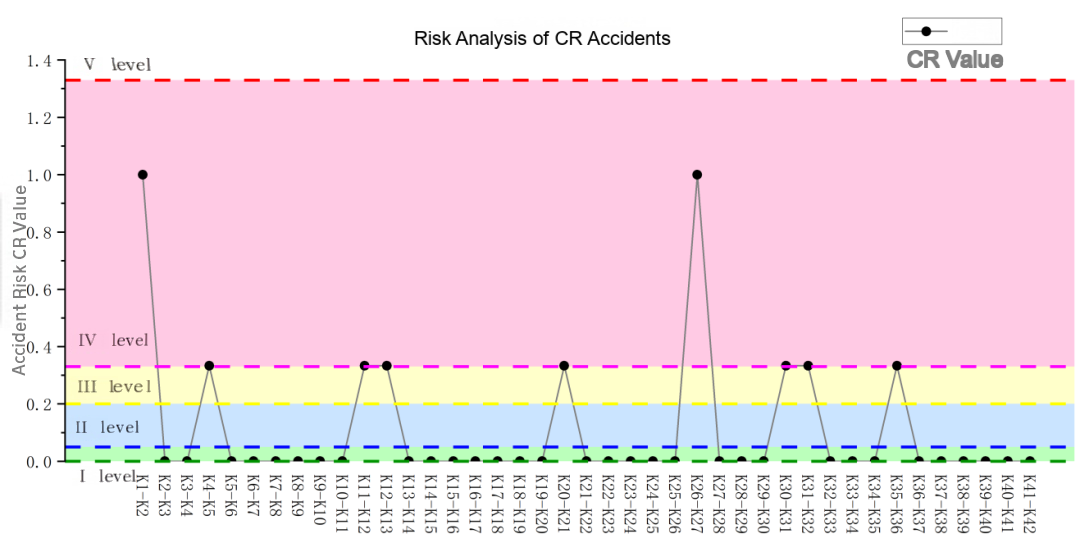
The value of theory lies in practice. The recently completed speed demonstration project for Provincial Highway S308 in Tangyuan County, Jiamusi City, Heilongjiang Province clearly shows how this methodology is implemented.
Project Background
Provincial Highway S308 is a major Class II highway. Its eastern and western sections have different design speeds (60 km/h east, 40 km/h west). The road passes through densely populated villages and towns, with multiple sharp curves and continuous slopes. Existing traffic signs are inconsistent. The authority planned to install average speed enforcement to regulate traffic order.
Demonstration Process
Final Conclusion
The report reached a scientifically sound yet counterintuitive conclusion: unify the speed limit at 80 km/h for all 7 speed enforcement sections. This value respects the normal driving behavior of most drivers (close to V85), avoids frequent speed limit changes through unified standards, and reserves space for managing high‑risk sections.
An excellent demonstration report should not remain on paper. Its ultimate value lies in translating into actionable, construction‑guiding schemes.
In the S308 project, the demonstration delivered not only a Speed Limit Research and Demonstration Report meeting the Ministry of Public Security filing requirements, but also a full set of implementable facility plans and enforcement suggestions:
Road speed limit and speed enforcement are highly technical, policy‑oriented and social tasks in traffic management. Moving from “empirical fixed values” to “scientific demonstration” represents a profound shift from “management” to “governance”. It concerns not only the legality of enforcement but also road safety, efficiency and government credibility.
The S308 case strongly proves that a data‑based, law‑respecting and systematic scientific demonstration can find optimal solutions to seemingly intractable speed limit issues, balancing safety, efficiency and public opinion. To further promote this transformation, we propose:
Establish a regular evaluation and optimization mechanismAs traffic environments evolve dynamically, speed limits should keep pace. Local traffic authorities should establish periodic assessments of road speed limits to proactively identify and improve unreasonable settings.
Adhere to data‑driven decision‑makingCompletely abandon arbitrary decision‑making. Make scientific demonstration based on operating speed, accident risk, road conditions and other multi‑dimensional data a statutory precondition for adding or adjusting speed enforcement equipment.
Strengthen support from professional technical forcesRoad speed demonstration is a highly specialized systematic engineering task involving traffic planning, engineering, safety analysis and data modeling. Encourage traffic management departments to procure socialized services and introduce third‑party institutions with rich practical experience and comprehensive technical capabilities to ensure objectivity, scientificity and authority.
In summary, successful speed demonstration not only identifies existing problems but also predicts potential risks and provides practical solutions. Its ultimate goal is to enable every road user to enjoy more efficient and safer travel on roads with clear rules, safety and order.













合作咨询
QQ 5257885在线咨询
合作咨询热线:
13779938068